Read our perspective on what excites, motivates and moves us
It’s all about giving you access to the content that can spark an idea, challenge the way you think and grow your understanding of the world around you.
It’s all free and we’d love you to be part of the ever growing community of readers.
A Q&A with Debbie Millman, designer, author, educator, curator, and host of the pioneering podcast Design Matters.
Short Bio
For two decades, Debbie led Sterling Brands as President, growing it from a 15-person boutique into a global consultancy acquired by Omnicom, while shaping campaigns for Burger King, Hershey's, and Gillette. She is also the founder and host of Design Matters, one of the first and longest-running podcasts, where she has interviewed 700+ of the world's most creative thinkers and makers. In 2010, she co-founded the internationally acclaimed SVA Masters in Branding program, now in its 16th year. And she is the author of eight books, including the award-winning Why Design Matters: Conversations with the World's Most Creative People.
Full Q&A
Q: You connect AI readiness to needing to have suffered through “the agony of the blank page.” Businesses are heading the opposite direction right now, removing friction everywhere they can. What do you think disappears when the friction is removed?
Debbie: What disappears first is the opportunity to discover what you actually think. The blank page forces a person to make decisions before they have any assurance that they are good ones. They have to choose a direction, follow it, recognize when it is failing, go back, reconsider, try again, and then try again! Over time, that process develops judgment and they begin to recognize the difference between something that is merely competent and something that has a soul and a genuine point
of view.
I understand why businesses want to remove friction. Some of it is indeed genuinely wasteful. But creative friction has value because it slows us down at precisely the moment when we are tempted to settle for a first plausible answer. When that experience disappears entirely, I worry that we lose some of our capacity to tolerate uncertainty, and uncertainty is often where an original idea begins.
Q: Is there a version of that agony that belongs to a team, not just a person? What would it look like to build it in intentionally?
Debbie: I think teams experience their own version of the blank page whenever there is no immediate consensus about what an answer should be. Those moments can be uncomfortable, particularly inside organizations that place high value on speed. Someone may want to resolve the disagreement, pick a direction and keep moving.
I would protect some of that disagreement, and give people a chance to think independently before the group begins synthesizing. I would ask that everyone articulate what they believe the problem actually is before deciding how to solve it. Then allow competing ideas to remain alive long enough to reveal their strengths and weaknesses. And then, leave enough time between rounds for people to reconsider what they thought they knew.
Some of the most important thinking in a room occurs before everyone agrees. A team needs enough space for somebody to say, “I don’t think we have it yet,” and for that sentence to be regarded as part of the work rather than an obstacle to completing it.
Q: Your students called using AI “augmenting” but they risk skipping the hardest part of developing original thinking. Do you see that same self-deception happening inside businesses?
Debbie: Yes. Businesses are exceptionally good at renaming avoidance as efficiency. “Augmenting” is an appealing word because it allows us to believe that we remain fully in control of the thinking while the technology simply helps us execute it. Sometimes that is exactly what is happening. Sometimes it isn’t.
The distinction I care about is when the machine enters the process. If people have wrestled with the problem, developed a position and made some intellectual commitments, AI can be an extraordinary tool for extending the work. When it arrives before those things have happened, it begins supplying the premises as well as the possibilities. You may still edit the language, rearrange the ideas and reject half of what it gives you, but you have already allowed it to determine a considerable amount of the territory you are exploring. This is where I see the self-deception. We can convince ourselves that editing an answer is equivalent to having arrived at the answer ourselves. Those are very different cognitive experiences.
Q: If you were advising a marketing team instead of a graduate student, what’s the one thing you’d tell them to protect?
Debbie: I would tell them to protect the formation of a point of view.
Before the deck, the campaign and the endless rounds of optimization, a group of people has to decide what they believe about the brand, the audience, the culture and the opportunity in front of them. That requires attention, debate, curiosity and enough time to notice something that may not have been obvious at the beginning.
Once that point of view exists, I would use every useful tool available. AI can help interrogate it, expand it, challenge it and execute against it. But I would be very careful about outsourcing the part where you decide what you believe. This is still the most valuable thing a creative team has.
This Q&A is part of our latest edition of The Shift, which explores The Case for Friction Read the full newsletter.
.png)

When efficiency is a mandate for every business, what’s the case for designing friction into brand and creative strategy?
If you are a marketer, a brand leader, an agency strategist or creative, you are being asked, if not required, to use and apply AI in your work to achieve more, in less time, with less cost.
This need is not new - in fact it is an underlying requirement for businesses of all sizes, especially the largest ones with the most growth to drive.
The risk of overuse of AI leading to mediocrity has been well documented. It’s why phrases like “human in the loop” have been used countless times. In truth, it devalues the role of the human as a checkpoint to the work AI is doing, instead of the one driving the thinking.
The reason this risk is being discussed so heavily is because it is real. In a recent opinion piece for The New York Times, Debbie Millman argues we aren’t ready to use AI until we have experienced what going through the “agony of the blank page” feels like. Until we understand what it takes to form our own point of view. In fact, this newsletter was written this way. Rounds of arguments and rewrites to land the argument and narrative.
Meanwhile, the business community is actively building AI into workflows to remove friction. Faster handoffs, fewer approvals, getting more done with less effort. We offer a counter perspective. Seek tension. Find differences. Embrace the discomfort of not having an answer yet.
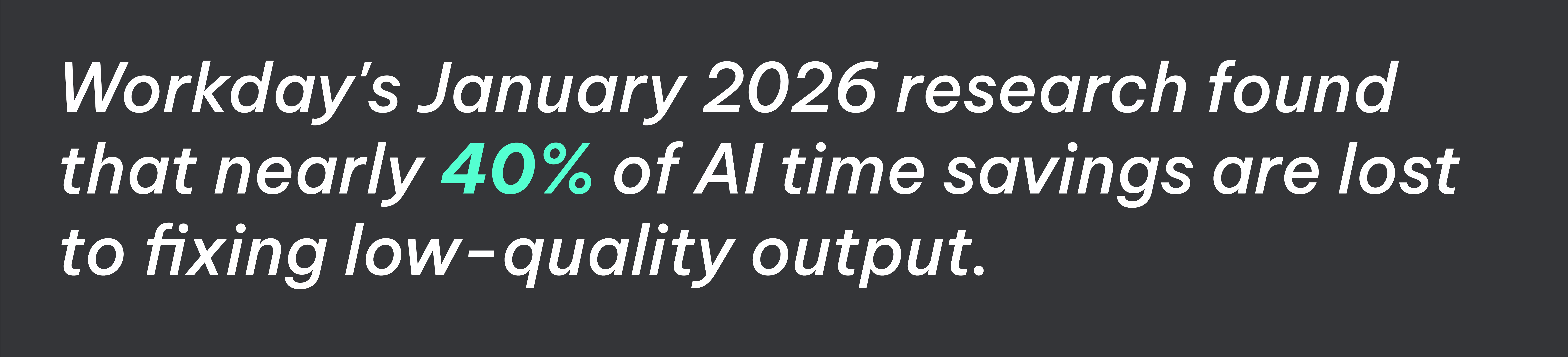
This is not about adding friction everywhere. It is about deciding that it is critical to developing brand and creative strategy. It is about building it as a deliberate system. Thoughtfully designed AI and proven tools handle the volume and speed. Taking a systematic approach to cultural intelligence surfaces signals much faster than traditional surveys. Strategy and creative experts are set up to apply their judgement at the moments where friction needs to happen.
Originality is hard. It always has been. As technology keeps making data and information more accessible, arguably it gets more difficult to develop original thinking, novel ideas and differentiated brands.

The fact that it is hard is also what makes creating exciting brands so rewarding. The brands and the people who develop them that embrace curiosity, look at things sideways, and understand that experience is everything, are the ones that will win. The ones we will reach for and talk about and care about. Bold, distinct, even a bit weird.
Which tends to run counter to what we have to do in business. Drive business performance, deliver the numbers. It pushes us, the companies and service providers who work with them, toward safe and mediocre solutions.
If asked, we will all wax poetic about how important creativity is, but when it comes down to making decisions about how to run a process, deciding how much to spend, how many rounds of thinking to include, how much time to dedicate, we “streamline” it to the bone.
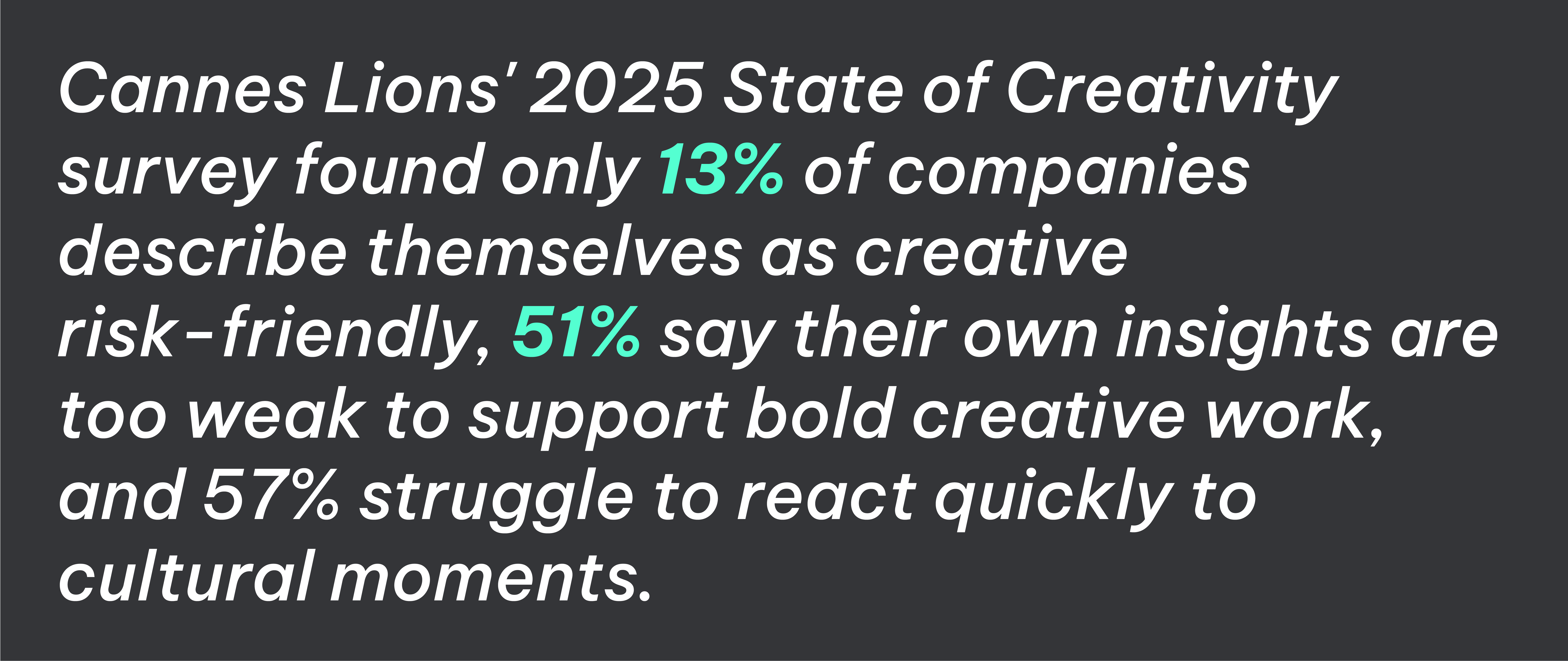
The pressure is real. The demands of the business world are powerful. Perhaps, intentional friction is an antidote. A principle to commit to and build into the processes and workflows we design. To get anywhere different than where we and others already are, we must have some space to seek and embrace tension. To reframe a situation. To find the odd, the unexpected, the exciting. We also have to bring people along, because going somewhere new can be scary. Part of the human condition is to reject and rebel against what is truly new, but that is often where the real potential lives.
Whether you are leading a major consumer or corporate brand, running agency projects, or working from your own independent practice, which of your last three briefs were signed off on the first draft without time to push back?
What part of your process does friction belong in?
How do you ensure your teams or your clients are committed to the role of divergent thinking, before committing to a direction?
The problem worth solving
At BeenThereDoneThat, it’s a never-ending pursuit. We designed SOLVE™, our problem definition methodology that we’ve run over 900 times with clients, to find the real problem worth solving. Not the obvious one that gets heads nodding. The one that you have to dig for. The one that leads to a shift. The one that gives a business the chance to design for significant change, not for incrementality.
We’re here for those who share the ambition to build brands that are relevant, distinctive, famous and loved. It’s the work we push for day in and day out.
Expert Spotlight - Debbie Millman
A Q&A with Debbie Millman, designer, author, educator, curator, and host of the pioneering podcast Design Matters. Read more
.png)

Contact us
At BeenThereDoneThat, we work with leadership teams to find the problem underneath the obvious brief. If the idea of designing friction into your workflows sparks something, we'd love to chat: enquiry@beentheredonethat.co

If desire is the thing you've always sold, what happens when it goes quiet?
One in eight American adults is now taking a drug that quietly switches off the urge to eat. The shrinking waistlines mean many categories are approaching it as a diet trend. It isn't. What is really shrinking is desire, and that’s not solely a food and drink problem. Although this is where it is showing up most, currently.
The truth is the customers haven't gone anywhere. The thing that used to make them buy has. Which means we need to shift from innovating for smaller appetites to designing for when the craving isn’t there at all.
Wanting was the product. Now it's leaving.
For a growing number of people, the craving that food and drink were built around has gone quiet. The instinct is to make smaller versions of the same things, or to make them more nutritionally dense. Smaller appetites = smaller portions or portions that deliver more of a nutritional punch. These are all perfectly reasonable and smart solutions but it’s probably not the whole answer.
Most industries built their success by designing for desire: yes fulfilling needs, but the big bucks come when you find a way to drive desire. Find the craving, meet it. The bliss point, the next bite, the third round. The product mostly just had to be there when the pull arrived.
GLP-1 drugs take that away. Ozempic, Wegovy, Mounjaro. People on them talk about "food noise" going quiet, the constant low chatter about what to eat next simply stopping. The same drugs soften the pull toward alcohol and cigarettes, which tells you this was never really about food.
What makes it a business problem rather than a medical one is the shape of the effect. The drugs seem to quiet wanting, the chasing and the anticipation, while leaving liking, the actual pleasure of eating, mostly alone. In one brain-imaging study, a GLP-1 drug lowered people’s response to anticipating food but not their response to eating it. So people haven't lost the ability to enjoy a meal. They've lost the pull toward one. The pleasure used to come bundled with the craving. Now the food has to deliver the pull on its own. For industries that have been structured around designing for the pull, this represents a knotty problem to solve that could open up a radical rethinking about how to innovate and design.
.png)
What the data means
Put the three numbers together and you don't get a clean picture. This isn't one world replacing another. It's one market splitting in two, with the line running straight through individual people. A large and growing group is living with the craving switched off. Most people aren't. And the same person can move from one camp to the other and back inside a year, depending on whether they're on the drug that month.
So you can't just pick the new customer and chase them. You need something that works whether the craving is switched on or off. That rules out the obvious move. When appetite drops, shrinking the product to match feels sensible: smaller packs, fewer calories, a diet line. But people aren't asking for less of the same thing. If anything they need a better reason to reach for it at all, and a smaller portion doesn't give them one.
What that points to is a principle, not a product fix. When nothing is pulling someone toward what you sell, the thing itself has to be worth choosing. Designed to be chosen, not compelled. It's also why "healthier" isn't the escape hatch it looks like. Many brands are already crowding down that road, and it still runs on guilt and earning. That's the wrong problem to solve.
The problem worth solving
The danger was never that people give up treats for virtue. It's quieter and worse than that. Once the craving is gone, the open question is whether food and drink still mean anything to a person, or whether they turn into fuel. Something you deal with rather than look forward to.
The brands most at risk aren't the indulgent ones. They are the ones nobody really chose. The ones that lived on habit and proximity, picked up because they were on the shelf and the hand was already moving. A brand people genuinely want can lose the habit and keep going. A brand that was only ever a habit has nothing left when the habit goes.
That's why this is a question about what you make, not how you market it. You go through a range one product at a time and ask which of them a person would still pick on purpose, in a life where nothing is making the choice for them. Some of the honest answers won't be things you currently sell.
Contact us
At BeenThereDoneThat, we work with leadership teams to find the problem that's actually worth solving. The one underneath the obvious brief. If the wanting/liking split has landed somewhere in your pipeline thinking, we'd love to chat: enquiry@beentheredonethat.co
Did you know that your wealthiest neighbor may well be crying in their car right now?
It turns out, there’s a lot of things we don’t know - the kind of unvarnished truths that get scrubbed out in prevailing cultural narratives and industry insight reports.
But there is an alternative reality happening under our noses. Its impact on your categories will be seismic, and the winners will be the ones that see it first.
We call these our Unseen Worlds. An Al-powered cultural intelligence system that decodes the signals, tensions and unspoken truths reshaping behavior en masse.
In an era of financial frenzy and unpredictability, we’ve explored the Unseen World of the Mass Affluent Audience. Here’s how it’s done…
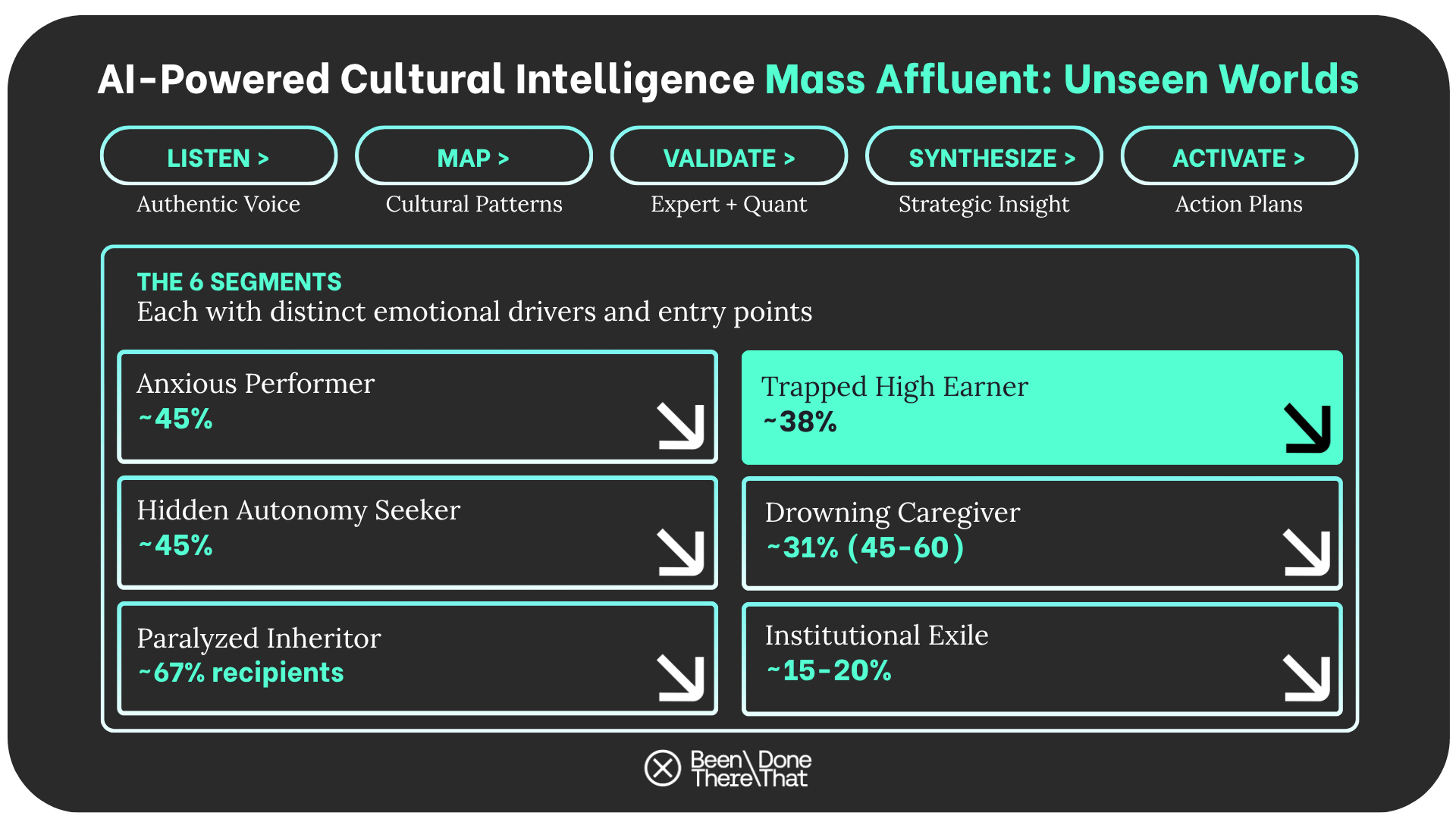
Segment by emotional driver
For the Trapped High Earner, the tension is not a lack of ambition but the golden handcuffs of success: high income on paper, low liquidity in reality, and a need for cash flow relief without judgement.
Same AUM. Completely different pressures, needs and unlocks. If you want to explore how Unseen Worlds can help your team spot the tensions others miss and solve for what matters most, get in touch.
Talent Spotlight - Abi Awomosu
“I don’t do market research. I listen to culture at scale.”
In this Q&A, Abi Awomosu, creator of The Billion-Person Focus Group® and author of How Not To Use AI, challenges conventional approaches to AI, showing that real insight starts with listening, not generating. Read more

Find the problem worth solving
When you spot the hidden tensions and unmet needs shaping behaviour, you can define the problem that really matters. Take our free 3 minute Power of Problem Definition Scorecard to see where your team stands.

Is rushing to solutions what’s really slowing you down?
Welcome to The Shift, our new look newsletter designed for people who don’t need more content, just sharper thinking.
Each issue, we’ll unpack the invisible forces shaping marketing today. From new ideas to new behaviours, and the shifts in mindset that make the difference between motion and momentum.
This month, we’re unpacking a pattern we’ve been collecting data on for over a year:
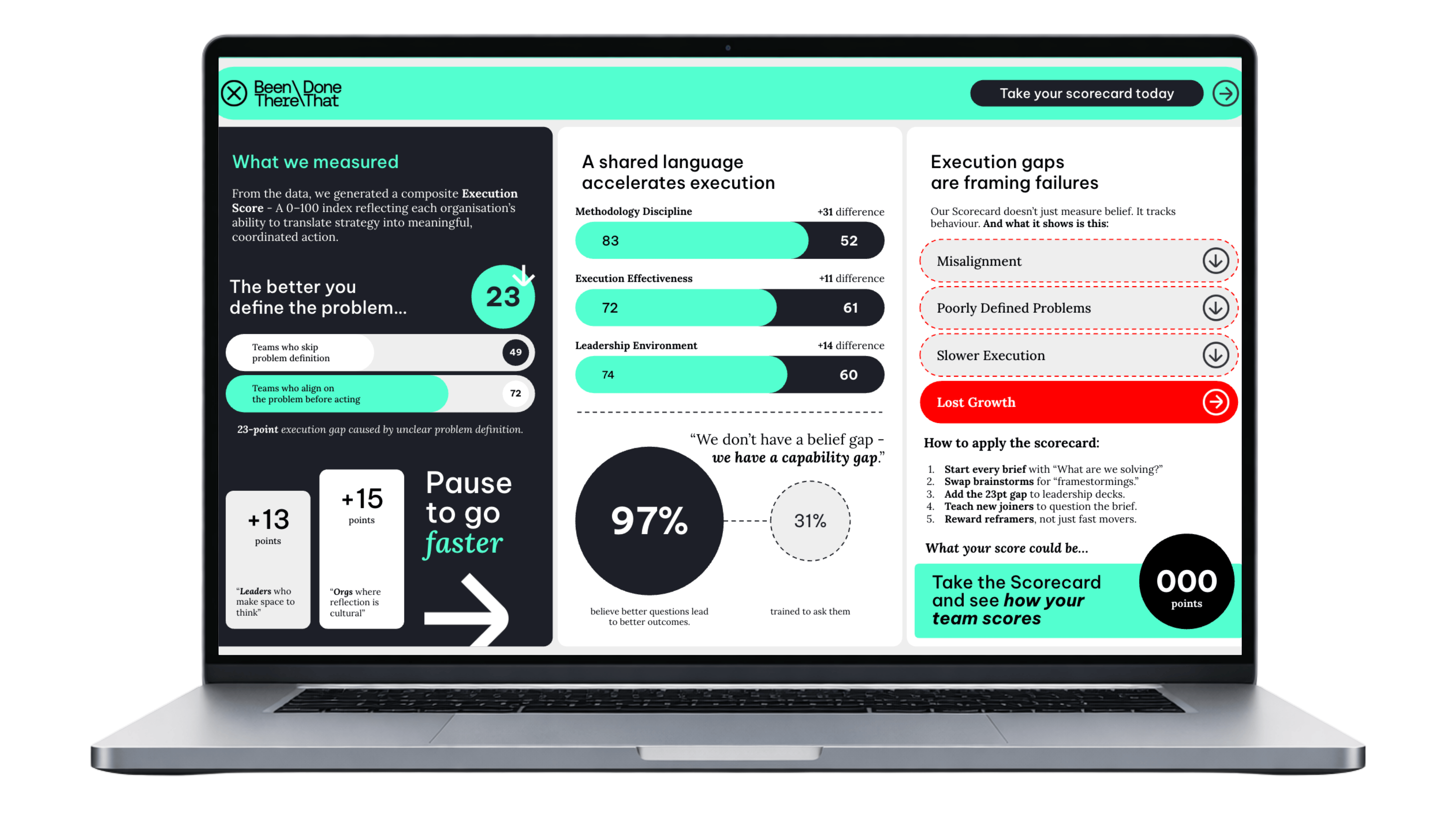
The better you define the problem, the faster you move.
BeenThereDoneThat’s primary function is to help our clients define their problems better with our SOLVE methodology, so they can accelerate growth. As part of that founding belief, we have gathered responses to our scorecard from 857 leaders across CPG, finance, healthcare and tech. We asked questions about how they frame challenges, how aligned their teams are, and how consistently strategy gets turned into action.
The answers tell a clear and compelling story.
How you define the problem determines how fast - and how well - you move. And in a world obsessed with speed, making this a focus ensures you’re not left behind.
Ed Rogers
CEO, BeenThereDoneThat

What we measured
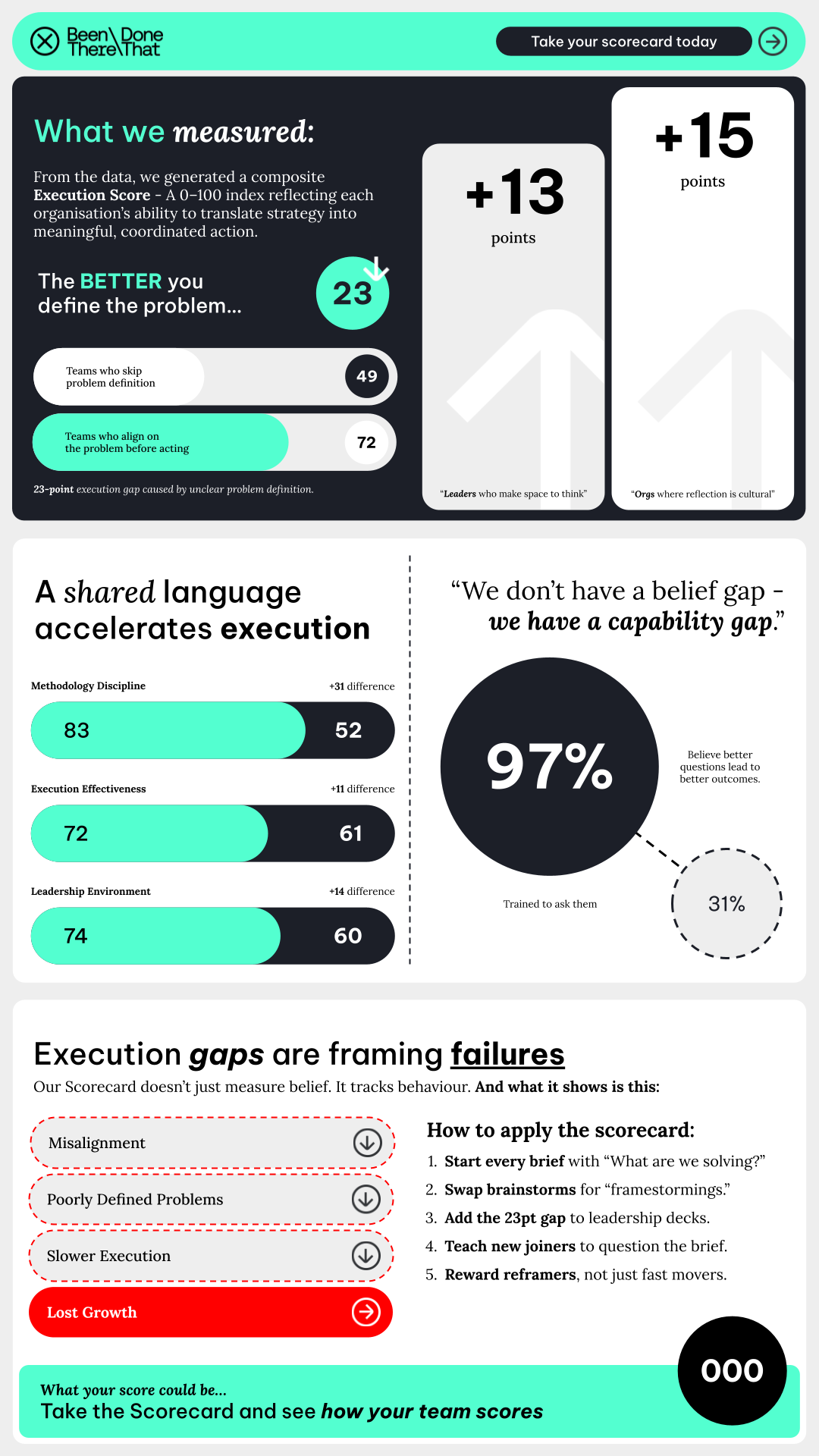
From the data, we generated a composite Execution Score — a 0–100 index reflecting each organisation’s ability to translate strategy into meaningful, coordinated action.
This score draws on multiple behaviours:
- How clearly problems are defined up front
- Whether teams align before jumping into delivery
- How often strategy connects, to execution
- Whether reflection and iteration are baked into the culture
The more disciplined the behaviours, the higher the score.
Here’s a snapshot of the data and how you can take this learning into your own organisation.
How to use this inside your org
You don’t need a transformation programme. Just better questions.
Here’s how to put the Scorecard to work - in meetings, in decks, in culture.
1. Start every brief with a “What are we solving?” slide
No jargon. No marketing speak. Just one page that names the real problem - and what success looks like.
Make completing it mandatory before anyone touches a deck.
Template it. Use it. Repeat it.
2. Swap brainstorms for “framestormings”
Before the ideas fly, run a 30-minute session with the team to align on:
- What’s the root problem here?
- What assumptions are we carrying?
- How can we frame the problem differently to unlock better solutions?
Use a whiteboard or Miro. You’ll be amazed what surfaces when people stop nodding and start defining.
3. Add the 23pt Execution Gap to your leadership decks
Show the numbers.
Teams that skip problem definition score 49.
Teams that align first score 72.
It reframes “thinking time” as a business advantage - not a delay.
Add it to your next QBR or planning pack.
4. Build Problem Definition into onboarding
Teach every new joiner the one skill that compounds: how to question the brief, not just answer it.
Create a 15-min primer using your own examples - “Good vs vague problems.” Use it in week one.
5. Reward the people who challenge the brief - instead of just running with it
Too often, teams celebrate the person who gets into solution mode fastest. Flip that.
Call out the person who paused, pushed back, reframed the problem - and helped the team avoid a false start.
Try this: at your next team meeting, share an example of a project where a smart question changed the course. Name it. Celebrate it. Repeat.
6. Benchmark your team. Use the data
Take the Scorecard with your leadership team. Then share the heatmap.
Use it to focus capability building — not just performance feedback.

Talent Spotlight - Chantaie Allick
A Q&A with Chantaie Allick one of our Problem definers but so much more, strategist, writer, founder, and truth-teller on how better questions create sharper brands, better briefs, and more human organisations.

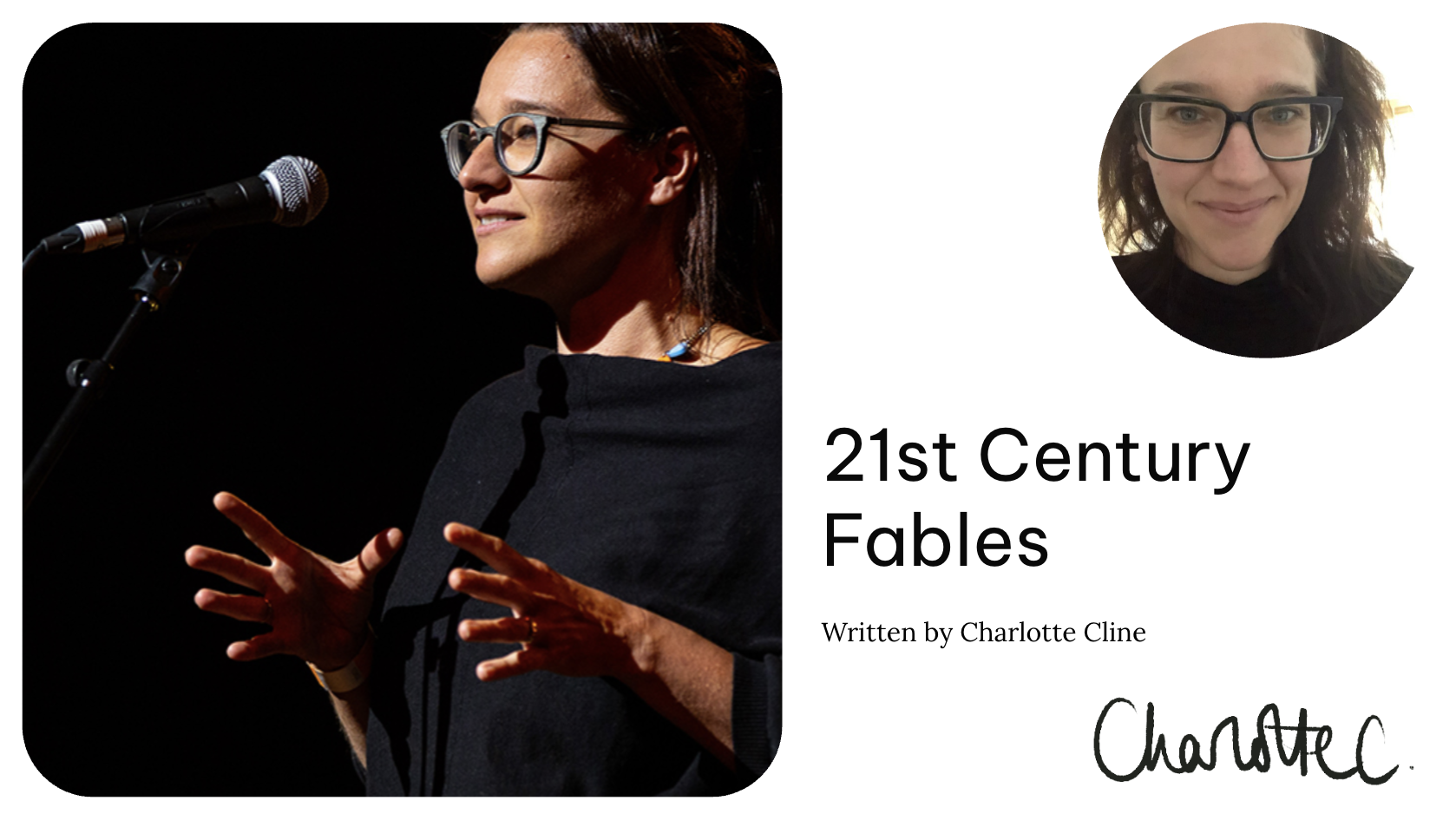
Hi, it's Charlotte here.
‘Story as it turns out, was as crucial to our evolution - more so than opposable thumbs. Opposable thumbs let us hang on; story told us what to hang on to.’
- Lisa Cron, Wired for Story.
For tens of thousands of years, humans have leveraged the power of stories.
To pass on wisdom, to delight, to protect, to instil fear and hope alike.
They are no doubt a crucial part of our success as a species.
During the September ‘24 presidential debate, we witnessed a 21st-century fairy tale in the making. Trump made a controversial and now widely debunked statement, claiming that immigrants in Springfield, Ohio, were "eating the dogs" and "eating the cats," If you didn’t hear it first-hand, you would have no doubt heard the memes. It has all the ingredients of your classic fable. A ravenous monster, a threat to your family. A promise of a leader that can save you.
For most of us, the moral was a warning against power-hungry dangerous lies.
But for many, it will have succeeded in stoking the very fear that it was designed to.
It was sticky. Simple. Memorable. Repeatable.
As the subtitle of the Micro Script Rules by Bill Schley states:
'It’s not what people hear. It’s what they repeat.'
Humans love stories.
As a community of thinkers, designers and strategists we often see storytelling play out in the hero brands of our time. Particularly in the origin story.
21st-century fables like Nike’s waffle iron, where running coach Bill Bowman made a new flexible sole using his breakfast waffle iron as a mold are the stuff of legend. Matt Blitz notes ‘The old waffle iron is brown with rust and broken into pieces. Yet there it sits in a protective case, smack in the middle of Prefontaine Hall at Nike's World Headquarters near Beaverton, Oregon.’
Innocent Drinks asking customers at a music festival to throw their empty bottles into bins marked "yes" or "no" to tell them whether they should quit their day jobs to start making smoothies full-time. College dropouts Steve Jobs and Steve Wozniak building their first computer, the Apple I, in a garage. They are simple, memorable, repeatable stories.
Every new business won’t have a great origin story.
But they can all write a new one, and many are, by pursuing a purpose.
Tony’s Chocolonely is on a mission to make the whole chocolate industry slave-free. Patagonia's founders announced in 2022 that it would be giving away 100% of its profits to protect the great outdoors and fight climate change. Dove’s Campaign for real beauty is battling unrealistic standards set by the beauty industry.
You'll notice they contain the elements of a classic fairy tale.
A monster to vanquish: modern-day slavery, climate change, unrealistic beauty standards.
A hero that is uniquely poised to vanquish it. And a promise of a happier ending.
The most important factor is that the story is authentic to your brand, and you pursue it in earnest.
Just imagine for a moment…
The epic tale of Frosties stepping up to save the tiger.
The legend of Tide investing in cleaning our oceans.
The odyssey of Amazon stepping up to protect… altogether now, the Amazon rainforest.
Now that would be a brand story we could believe in.
Most importantly they tell us a story about ourselves too.
That we care to be a tiny part of writing the future.
Charlotte Cline
Founder & Creative at One Man Band Design (First published on the 20th September 2024)
Further reading:
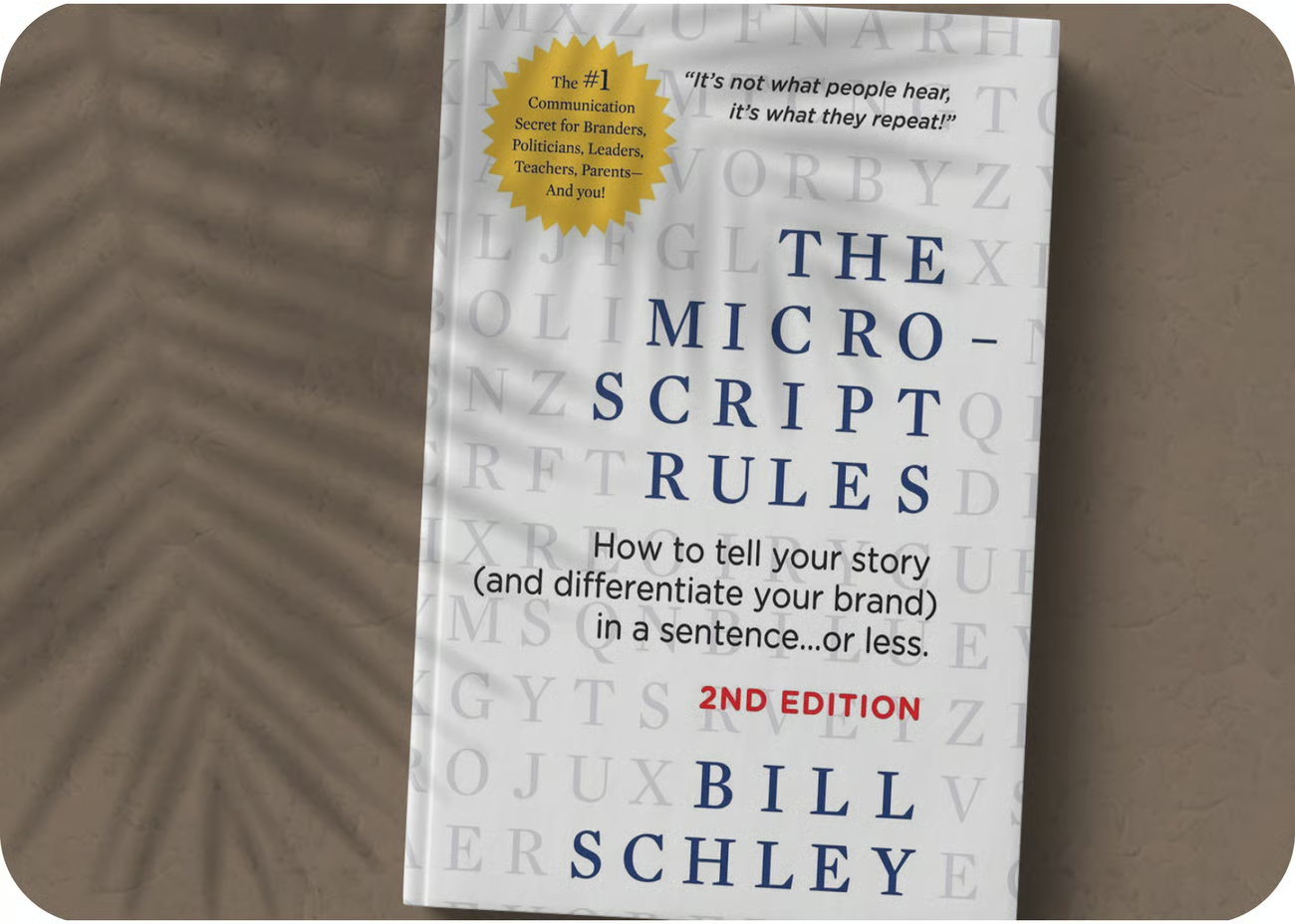
1. Micro Script Rules by Bill Schley

2. How a Dirty Old Waffle Iron Became Nike's Holy Grail

3. Inspired Companies by Lisa MacCallum & Emily Brew

4. Listen to Charlotte tell her story live at The Moth Grandslam London
Hi, it's Luke here.
In our content obsessed world it can be challenging to express all the nuances inherent within a brand, especially if you are in the retail sector. With new products dominating the messaging, how do you maintain and inspire with all the other tools in the box? From customer service to internal culture, branding, packaging, customer experience and everything in between; all this adds up and can be the difference between long term and short term success.
Just before Covid hit us I was visiting a friend’s office where he was showing me how they were collaborating with GANNI and Levis on a collection. Exciting stuff, but my friend’s venture is essentially a tech business so I was intrigued to know where they fitted in with this collaboration? Ahead of the curve as always, Nirvana CPH (Sharp End) were embedding NFC technology into the label of the jeans - a repurposed and upcycled denim line available only to rent - enabling all sorts of content to be transmitted to your phone. In this case product care information, story - based production information and interactive campaign elements such as the chance to upload a love letter to the community. All serving to underpin a collection designed to be ‘worn by many, owned by none.’
It was innovative, engaging and embodied GANNI’s sustainable business model proposition and remains a fantastic example of what I am obsessed with in my own work - adding value in ALL aspects of the brand experience. Often past the point of purchase (in this case rental) to deliver the magic that helps us choose one brand over the next. To be able to infuse carefully considered touchpoints that are genuinely meaningful to a brand’s community, while simultaneously reinforcing the culture of the business and activating new ways of doing things. Inside and out.
As a customer we shift between various need states of actively looking for things we need or want, to benignly ‘checking out’ for long stretches of time, and brands need to recognise and respond to this. Do we really need to send four inbox clogging emails per week then or will one or two really good emails be better? Does the brand have the same tone in broadcast media than it does on the website? When and why are we useful, informative or entertaining?
As a strategic creative working with fashion and lifestyle brands this is where I become particularly excited by the details. The incremental details which support brand storytelling, where we can improve the ecosystem of the tools we have bit by bit. The constant small steps and percentage points that add up to a greater whole and a deeper connection. Are all the emails we send really relevant? Does the return form give a proper opportunity for insight? Is your ‘Wishlist’ shareable? Are you driving real loyalty?
There are often so many channels that it can seem overwhelming to the teams involved in creating these communications, and with so many calendar work streams it's easy to churn out content that isn't really good enough or differentiating. But if we look at our customers and actively listen to them, I believe the answers begin to reveal themselves and the task becomes clearer. Once again Ganni is excellent at this, engaging their community in feedback to tweak and develop existing popular pieces, Boden does the same with huge success.
So, what can we do to put a brand in the best position for its potential customers’ consideration? Obviously budgets and objectives will differ and there is no formula that can guarantee this, but in the very first instance there needs to be an agreement that the C Suite buys into the ambition and time (perhaps more importantly than budget) to be invested to achieve this, innovation needs to time to ferment and find its voice.
So, let’s cut to the chase, how do you prove to your boss that you are to be trusted with the task? As with all of life, you need to bring people along with you, SHOW them what you mean, actually do something, prove it! Then you gain allies, you start a trend which eventually becomes the benchmark of how to operate. Trying things - testing things out - has to be a part of the work. Listen and learn from responses and build on them, but above all we must commit to some experimentation if we want to grow and lead the way. Ask yourself how ‘it’ can be better, and go for it.
Luke Williamson
Community Member at BeenThere/DoneThat Partner(First published on the 24th November 2023)
Further reading:

1. Resale’s Fast Fashion Purge

2. Ditte Reffstrup on Ganni's key to success and the brand's sustainable business model
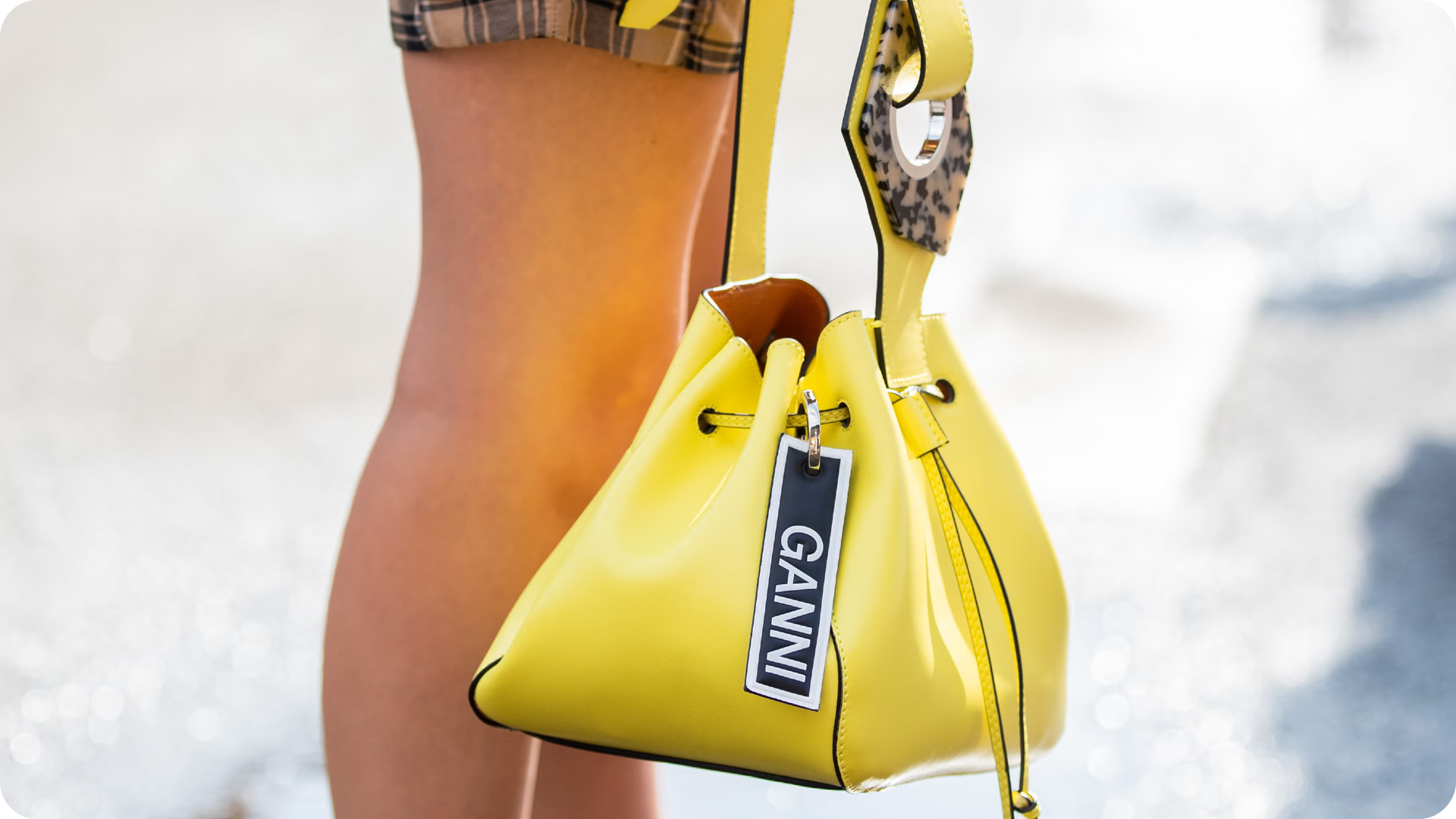
3. Ganni to launch its own rental service
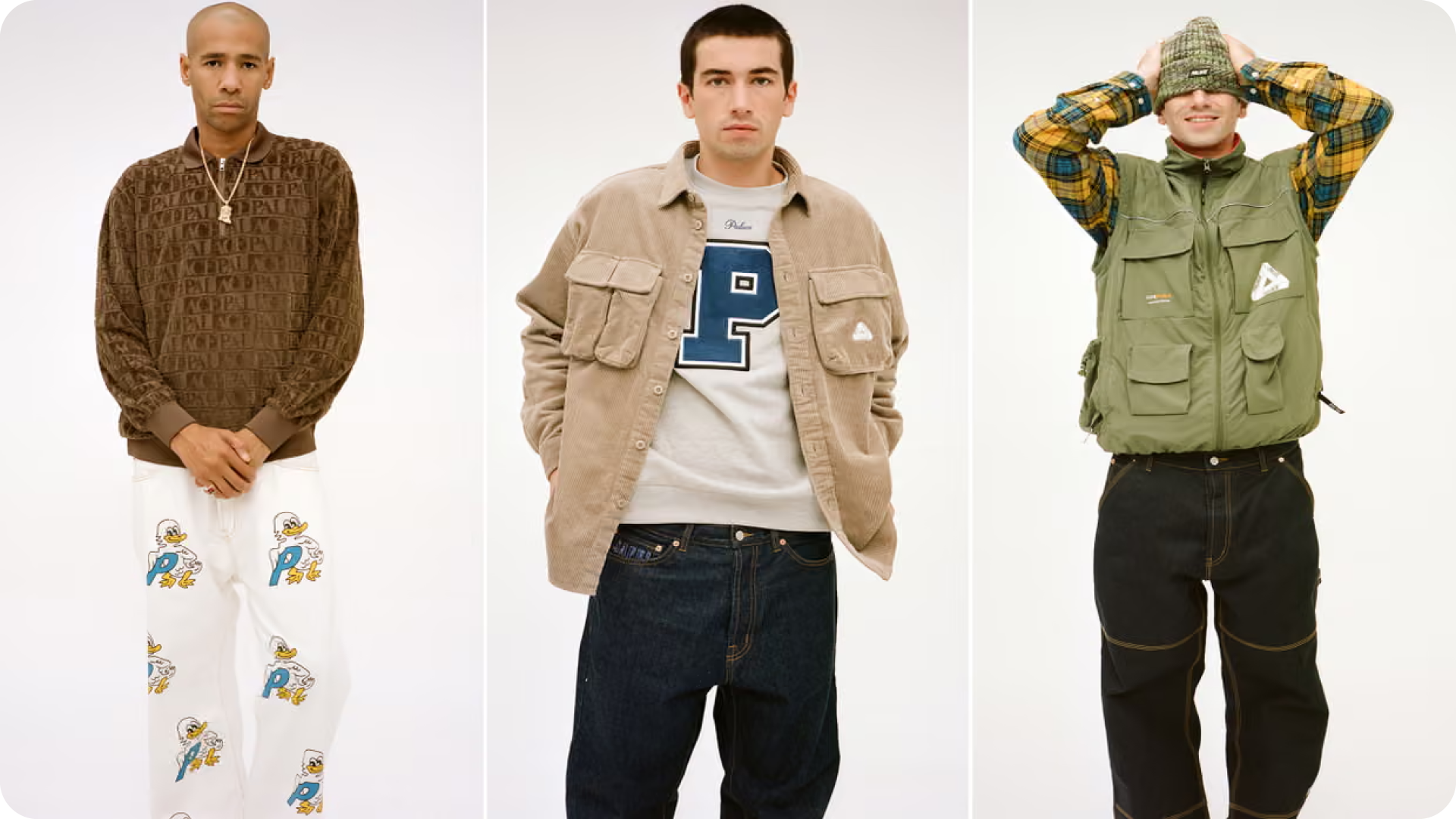
4. ‘It won’t tell you anything useful’: how Palace turned product descriptions into art

Hi, it's Dom here.
Our story begins in the early 20th century and the explosion of radio as a groundbreaking medium, with families gathered around crackling radios, listening intently to captivating stories and catchy tunes. Advertisers seized this opportunity, crafting memorable jingles that became the soundtrack of an era. These melodies and messages weren't just selling products; they were weaving themselves into the fabric of society, imprinting brands into the minds of consumers.
We fast forward to the ever-colourful world of television in the mid-20th century. With visuals taking centre stage, sound remained a steadfast companion, amplifying the impact of advertisements. Memorable slogans and jingles like "I'd Like to Buy the World a Coke" danced through living rooms, making a genuine impact on popular culture.
However as we enter the digital age our story started to change. Whilst sound was still there, visuals started to dominate more and more. How a brand ‘looked’ was seen as far more important than how it ‘sounded’.
But not all was lost.
The late 90s saw the idea of sonic logos emerge with gusto - the Intel Inside mnemonic still often cited as best practice in the field. Since then many brands have begun to take their sound much more seriously and we are in the midst of a sonic branding renaissance with brands such as MasterCard and Coca-Cola innovating and investing heavily.
So where are we today and why should sound matter to brands?
I don’t need to tell you how distracted we all are or how screens and social media feed off our attention; however, within this quagmire the ability to be heard becomes evermore important. When we hear a sound our echoic memory works far faster than our visual one and it has the ability to store memories in a much more potent way. All of us have witnessed how a sound or a song can transport us instantly to a time or a place - this is the power of sound and memory in action. In a cluttered environment someone may well hear (and then recall) your brand far better than notice it through the visual noise that surrounds them.
Sound in the form of music also has a unique ability to move the emotional dial. When a brand uses musical cues in the right way (from ads through to retail, experiential to endorsements) it can transform the mood of the user. Making people feel happy, safe, valued or excited through sound is never a bad thing!
Added to this is the fact that millions of customers are also choosing to listen vs watch with their leisure time. According to recent research from MusicWatch over half of US households now have a digital music subscription and podcast and non-linear radio use continues to boom. Brands need to think carefully about how they sound in these environments. The music they use, the choice of voice, the creation of a sonic logo; all of these things require the strategic rigour and creative flair that goes into the visual articulation of brands.
Technology has long been the friend of music and we’re entering an incredibly exciting time where generative AI is allowing us to create new sounds, music and voices almost instantly. It also allows us the chance to adapt and customise how things sound, change language, change genre and personalise sound. All of these things present opportunities for brands to consider. How will they let audiences interact with the sound of the brand? Is their sonic identity static or fluid? How can they make their sound dynamically fit occasions, channels, locations with ease?
I’ve always been fascinated by how things sound and will never be bore of trying to make others excited by it too! I believe every brand - from start-up to global giant, disruptor to establishment - need to care about how they sound and jump on board the exciting world that lies ahead.
Dom Hodge
Head Of Music & Sound at Yoto and Member of the BeenThereDoneThat Expert Network
(First published on the 15th March 2024)
Further reading:
1. Sonic branding will gain traction in 2024: But what is the recipe for success?
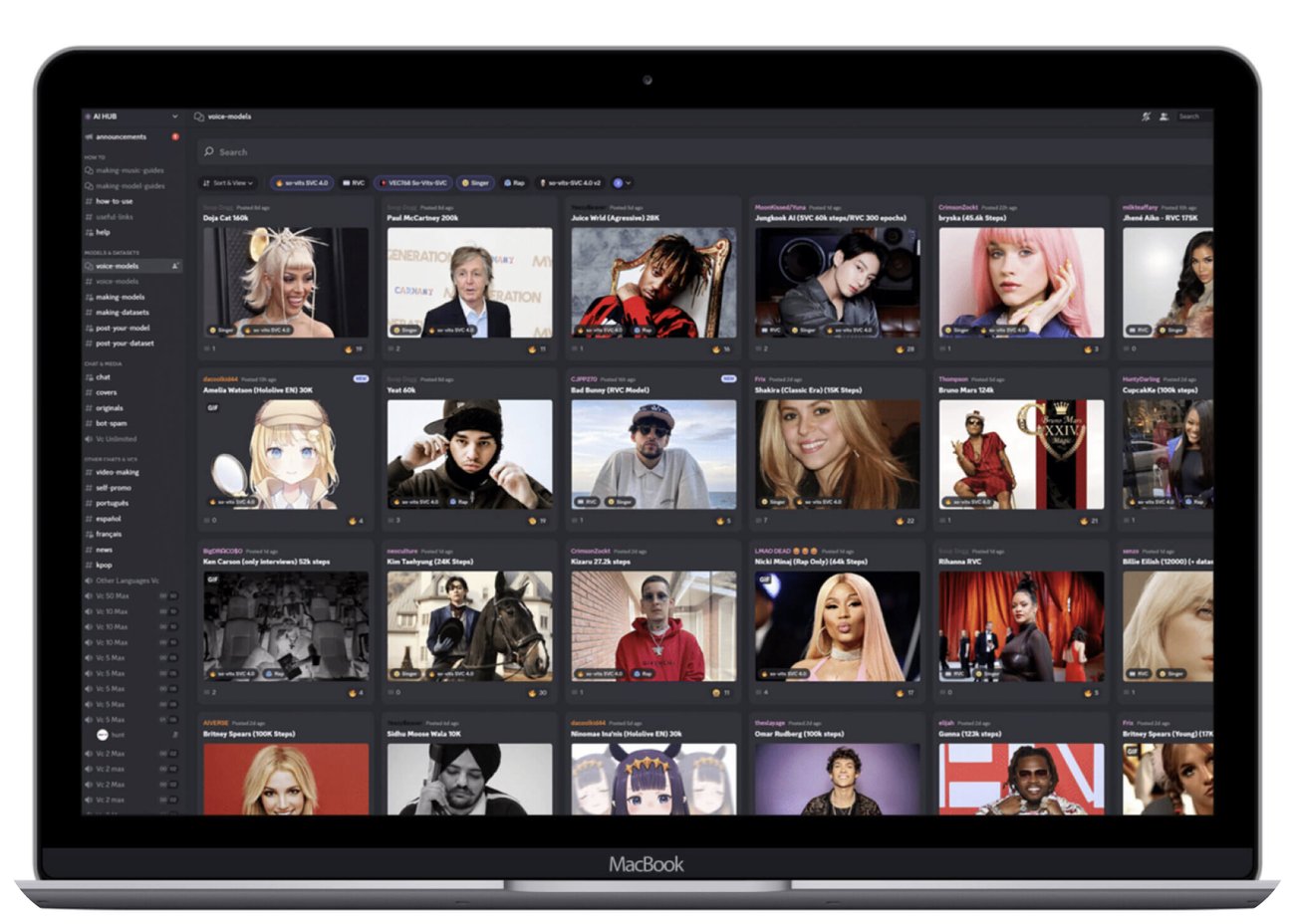
2. The Future of Music: How Generative AI Is Transforming the Music Industry
3. Why brands should consider the power of connection through shared song
4. Why companies should associate their brands with sounds

Hi, it's CLo here.
When we think of Customer Experience (CX), we often think that it’s about serving and meeting the needs of customers, by improving their experience and relationship with a brand or organization. But have you ever thought of CXing yourself? If this term doesn’t yet exist on Webster or OED, I can assure you at some point it will. Things get pretty interesting when you start to apply CX thinking to your own career.
So what happens when you treat yourself as the customer? What are your own unmet needs? What are your ideal touchpoints and ecosystems with which to operate best from that really play to your unique strengths?
Here are three things I’ve learned from organically CXing my own career, as well as those of the students I’ve taught at Central Saint Martins over the last decade in between my commercial work, and the professionals I mentor in my own practice. Hopefully it will inspire some food for thought for you too.
1. Know yourself inside and out.
I don’t believe in a one-size-fits-all approach to carving out your ideal career. What I have found, though, is that it’s fundamental to listen to your own needs and invest in the things that make you tick – and continuously tweak it over time like a recipe that just keeps getting better. In psychology there is a term called interoception, which is your self awareness of what’s going on internally – physically, emotionally and physiologically. I think this is key to knowing yourself and carving out your trajectory – it helps you identify interests that can become your superpowers, fine tune your thought processes, and figure out the working cadence that works best for you. Each opportunity is a valuable way to feel out what works for you and those you work with – whether it’s moving upwards, sideways, outwards, in-house, agency side, client side or your own startup (or even creating your own industry) – it’s being able to turn your interoception into opportunities that open up new pathways for resilience and growth. For example, Freedom Unscripted Films by Shib Mathew explores unique freelancer journeys beautifully.
2. Create and nurture your ecosystem.
One of the biggest things I learned early on is that the most successful careers seldom operate as isolated islands. They thrive because they are an ecosystem of people and relationships – not just clients but also the people you work with, the professional services to create the right foundation to operate from, and the right collaborations to make magic happen. And because I’m always hungry and speak in food, I’m going to quote culinary legend Massimo Bottura of Osteria Francescana, who says a great Michelin experience is 50% food (kitchen) and 50% service: “Good floor staff can save a modest dish but bad service can ruin a great dish.” In other words, even if the work is excellent, that’s only half the story – without the right teams, suppliers and environment for collaboration, it will only go so far. We often focus on getting the work right, but what are you doing to nurture the quality of your relationships to a) secure the right work in the first place; b) assemble the right people to make it happen and c) ensure the work delivers the right impact to the right audience?
3. Ride an ox whilst looking for a horse.
Yes – you read that right. There is an ancient Chinese proverb: “騎牛搵馬” – “Ride an ox whilst looking for a horse.” It means making judicious use of what you have before something better comes along. You might be aiming for the moon, but to even have a remote chance of landing on your proverbial stars, you’ve at least got to start with a mindset of possibility, and flexibility to pivot and adapt the skills you’ve accumulated along the way. Even if you’re not currently in the perfect role, or at your desired destination on your career journey, how can you creatively hack the tools in your flywheel to maximize what you want to achieve – or at least move towards the right direction? What are the tiny but potentially significant things you can introduce, or small windows of opportunity that allow you to enhance your skill or create space for growth? Even something seemingly small can snowball into a massive career, especially if you love what you do. Case in point: Lil Nas X was once a diehard Barb (aka Nicki Minaj fan) which allowed him to develop his creative marketing skills and musical confidence that ultimately led him go viral globally and break boundaries – both musically and sartorially.
Interested in starting your own CX/EX journey?
Feel free to connect with me on Linkedin.
CLo (Charlotte Lo)
CCXP, Independent CX Partner and Member of the BeenThereDoneThat Expert Network, Yuno Juno Freelancer of the Year (UX)
(First published on the 14th June 2024)
Further reading:

Interoception: the hidden sense that shapes wellbeing

Freedom Unscripted Films – a series of films that champion the freelancer economy

Netflix Chef’s Table Volume 1 Episode 1: Massimo Bottura


Hi, it's Saul here.
I have a love-hate relationship with Commercial Creativity.
By ‘Commercial Creativity’, I mean the loosely defined name given to a group of activities from the marketing function in a business, to those who help those marketers do what they need to do.
I was for a long time of this world: I did lots of things in those roles, some of those are still part of my life, but they are no longer all of my life.
This is a short exploration of the lessons I have learned at the coal face working with others as they chose to stay or leave that space.
Staying in your lane: the good, the bad and the ugly.
It’s an industry, which at its best, is the best of things: smart, creative people, pushing boundaries, often at the forefront of technology.
It can be the most invigorating kind of job. It is a wonderful mix of art and science. Its skills are transferable across geographies and cultures, they can travel the world.
There are many things I miss, but many that I don’t: For agencies in particular, there are the late nights and cancelled plans. There are pitches that can go on for years, where many resources are channelled and many sacrifices made, often with no reward for those who have lost.
Whether Commercial Creativity likes it or not, much of it is also deeply rooted in the way capitalism worked in the past, with what worked then. It is an industry that finds it hard to change, because it is bound to a different way of being.
But it’s also an industry that is able to change behaviours like few others. It can and should be the engine of getting us out of this climate mess, but only if it can change its own mind.
There is one other big challenge and it is a very personal one.
There is a lot of sameness in the work. I don’t mean the outputs, I mean in the inputs, in the making. The same things comes up time and time again. The subject may change, the year, the focus, the budget but there can be an unsettling sense of déjà vu. People get bored.
This is not industry specific, far from it, but it is something that causes many to ask - Is this it? Isn’t there more?
Seek the metas.
So what’s to be done if you are bored, frustrated? Where can you go? What can you do? For that you need to explore those gifts that the industry and its people share:
They can have ideas on demand, often under great pressure with limited resources. They can help get businesses out of a tight spot with clever thinking and bold action. They can help set businesses up for future demand.
And because they are often category agnostic, they come to the party without the institutional knowledge of a specific sector, they can see things others don't, because they don’t know what they are supposed to see.
It is culturally adept. It understands cultures because it is often either a mirror of them, or, when it is really good, a driver of them.
It is scrappy, it has hutzpah. This is an industry that can be unreasonable in the pursuit of results.
It can do this because it is also a place of diplomacy, where different agendas somehow find their place. Which means it can do something very difficult - compromise enough to get stuff made, without losing what makes it worth making.
‘Where patterns are broken, new worlds can emerge.’ - Tolkien
These are skills that can be used in lots of different places beyond the industry, they are valuable, they are powerful, but they have their limits.
Those edges are perhaps best defined by the idea of ‘Going upstream’.
I know where it comes from: it is commercially interesting: for agencies there are different, bigger pots of money if you can help in a broader, bigger way. For agencies and marketers alike it is also technically interesting, these are very different kinds of problems that are much deeper in the business and challenging in their scope.
This is a world where those meta skills, whilst useful, can only get you so far. It’s like peering up the river, seeing the destination, but only having a rubber dingy, a small paddle and knowing you probably need a motorboat.
It is here I found my limits, it is here you find my decision to go back to school.
When I did, I realised there were questions I wouldn't have got anywhere near asking, the answers to which I couldn’t have even begun to approach.
Questions like this…
How do markets form? How do they die? How do you think about commercial logic when you are about supply push vs demand pull? In inchoate spaces, full of ambiguity and nuance, how do you claim, demarcate and then control?
My ambitions and limitations they presented were difficult to accept, it has been a challenging journey, but my god it has been worth it.
Saul Betmead de Chasteigner
Consultant, Coach and Associate Fellow, Saïd Business School, Oxford University
(First published on the 7th June 2024)
Further reading:

https://funnyitworkedlasttime.substack.com/p/how-to-see-the-bigger-picture-in

https://funnyitworkedlasttime.substack.com/p/a-frame-for-life

https://funnyitworkedlasttime.substack.com/p/no-risk-no-story

https://funnyitworkedlasttime.substack.com/p/what-is-your-work-heaven-vs-work

Hi, it's Giles here.
The genesis of this week's newsletter was the result of scrolling through X on a Sunday night and coming across a post referencing Histography.io's incredible visualisation of historical events. I had never heard of it, but it really captured my attention—probably for way too long. It uses Wikipedia as its data source, and each historical event sits as a single dot.
The brilliance here isn’t the data per se, but rather the spatial construct: time becomes literal distance. This helps to visualise scale. From my random clicking, I realised that the first underground railway line in London started operating in 1863, the same year the American Civil War was still raging. It feels true because I can see it, not just because I read it. Histography turns the textbook timeline into a playground.
Data visualisation at its best is a bit of a magic trick. The numbers become stories, dots become people, and the abstract can feel concrete. The Pudding’s interactive essay, “How Hollywood Sees Asian Americans,” zooms us into the present. Scraping 2,300 films, it plots every role played by an Asian American actor on a grid that measures screen time and character agency. Hover over a dot, and up pops Michelle Yeoh in Everything Everywhere All at Once or Ke Huy Quan in The Goonies. Data that might have languished in a report is impossible to ignore because it moves as we move across the screen.
There is a simple idea that links Histography and The Pudding, which is that sight unlocks insight. Whether visualising the timeline of empires or plotting Asian American actors, the designers made the invisible visible. Both of these examples are leveraging the power of digital media, but that is not the reason they are so powerful and engaging. The common denominator is that they are designing from a question. There is a powerful sense of curiosity at the heart of them.
In 1869, French civil engineer Charles Joseph Minard condensed the entire story of Napoleon’s disastrous 1812 march on Moscow into a single poster. A coloured ribbon shows troop size shrinking as it moves east; a black ribbon shows the frozen retreat, and this is overlaid with a thermometer of Siberian temperatures. Edward Tufte, the ‘Galileo of graphics’ (Bloomberg), still calls it “the most eloquent, graphic illustration of war ever made.”
Minard was semi-retired when he read an 1859 history book that quoted the size of Napoleon’s 1812 army but never showed how and where it was lost. He was appalled by the ‘intellectual negligence’ in the official tables and reports, and this drove him to answer what he saw as the critical question: ‘Where, exactly, did Napoleon’s half a million soldiers disappear between Lithuania and their return from Moscow, and what forces hastened that disappearance?’
Ultimately, what links this 19th-century map with the interactive digital storytelling of today is the intent. They transform our passive reading of facts into an active process of discovery, proving that sometimes the best way to answer a question is simply to draw it.
Giles Jepson,
CGO at BeenThereDoneThat
Further reading:


https://pudding.cool/2025/05/aapi-casting/


Hi, it's Jenny here.
The Elusive Power and Potential of Entertainment
We know entertainment is a powerful and potent source of influence - indeed, only last week, Tim Davey framed the BBC as a tool to ‘create a UK that is more inclusive, more secure, and more successful.’
Ever since laundry companies created soap operas to help sell washing powder in the 1930s, brands have sought entertainment’s influence. However, the promise hasn’t (yet) been fully realised.
There was a feverish buzz of excitement about twenty years ago when ‘new media’ (as the internet was called back then) would give brands endless opportunities outside of traditional advertising. Red Bull’s model - a media company not a soft drink - was heralded as the future and projects like BMW Films ‘The Hire’ swept the awards circuit. Unfortunately, these successes didn’t reshape the industry. Brands focused on what they wanted to say rather than what people enjoyed, leading to a fair bit of aggressive product placement, cringey branded content and a general sense of disillusionment.
There have been some notable successes. In 2009 I was fortunate enough to work on an innovation project with Lego. The core strategy was to create an entertainment franchise rather than a toy range. So, rather than just ‘Lego Ninja’ we built a rich world called Ninjago, with characters, backstories and narrative arcs that could expand into multiple formats over time (side note: there is nothing more entertaining than listening to research groups where 6 year olds discuss the merits of skull monsters vs snake monsters). However, until recently these examples have been the exceptions rather than the norm and, generally, a business rather than marketing initiative.
So far, so negative. And yet I remain firmly of the belief that a flourishing relationship between brands and entertainment can be a huge win:win for all sides…audiences included.
And we’re now at the tipping point where it might finally be possible at scale.
Why now?
What has changed is that there is now mutual need on both sides: We have the gift of desperation with both industries facing systemic challenges…
Entertainment
- There is a financial gap to fill: Funding has been stripped out of the UK market leaving a £400m shortfall with huge swathes of the production force struggling to find work and AI threatening further displacement. Globally, Disney is trimming $3 billion from its content budget.
- There’s cultural fatigue: A pop-culture apocalypse of bots, distraction, AI slop and endless sequels. We’re at a tipping point with the beginnings of a backlash and renewed appetite for fresh ideas.
Brands
- The attention drought continues: Fragmented and inaccessible with a third of internet users now blocking ads. No one needs to give their attention to anything that doesn’t interest them.
- Commoditisation increases: Loyalty is on the wane (if it ever existed) and there’s been much discussion about brands’ increasing sameness.
These systemic challenges, coupled with the reducing costs of entertainment production and creation from AI are (finally) creating a new set of conditions and opportunities.
So, how do you do it?
I’m sure there are loads more but here are 5x business models that are worth experimenting with. (I’ve focused on TV/film here because I happen to like it, but it could apply to any IP or creator talent really)
- Equity investor: Pay for a proportion of the budget and keeps a slice of global sales, rights etc. E.g. Saint Laurent Productions co-financed award-winner Emilia Perez.
- Studio/Distributor partnerships: Develops projects with a guaranteed ‘pipe’. Nike’s Grid Iron Entertainment and Apple’s partnership.
- IP reboot: Buys dormant rights and relaunches them. Mattel turned an ageing doll into a US $1 bn Barbie movie franchise.
- Event spectaculars: Finances a live spectacle, then monetises around it. Louis Vuitton’s Pharrell runway streams draw 5–17 m live viewers.
- Franchise extension: Partnership unlocks supporting content, merch etc. White Lotus collabs (and, unofficially on Etsy!).
To make these possible also requires a mindset shift. The theory might make total sense but, as with most things in life, it’s the actual, practical reality that trips things up. Neither industry is set up for these models so there needs to be a system shake up. Here are three final questions to wrestle with:
Spread-Betting: Can we act more like a seed-investor with a risk tolerance for failure so it’s possible to try stuff and see what works?
Creative Sovereignty: Can we let those who know how to make and distribute great stuff do it their way? Can we get comfortable swapping creative control for more valuable assets to monetise?
Process Shift: How do we set teams up to fit into entertainment rather than the other way around? Do we understand commissioning, distribution, and syndication? Can we think platform / format first?
So, in conclusion…
We’ve had good ideas about branded entertainment for a long time…and it’s hard. Hopefully now is the moment to get stuck in and make it happen for everyone’s benefit.
As Richard Osmond stated on the wonderful Rest is Entertainment podcast: “ideas themselves are almost worthless<…>the hard work is in developing (them), in testing them, in casting them and directing them and cutting them.”
Or, to quote Lego Ninjago’s Sensei Wu: “Now is the time to unlock your true potential”.
Jenny Howard,
Problem Definer / Strategy Consultant
You could try clearing the filters, using different filters or the search box.